The most consequential period in any geopolitical transition is not the collapse. It's the shift that precedes it.
This is the sixth and final entry in the Pressure Points series, a collection of observations on resource scarcity, infrastructure fragility, and geopolitical leverage that informs the analytical foundation of the Hammurabi Code Series. If you're arriving here for the first time, the previous five entries are linked throughout this piece. Start anywhere. But this one is the capstone. It's where the thesis lands.
The Central Observation
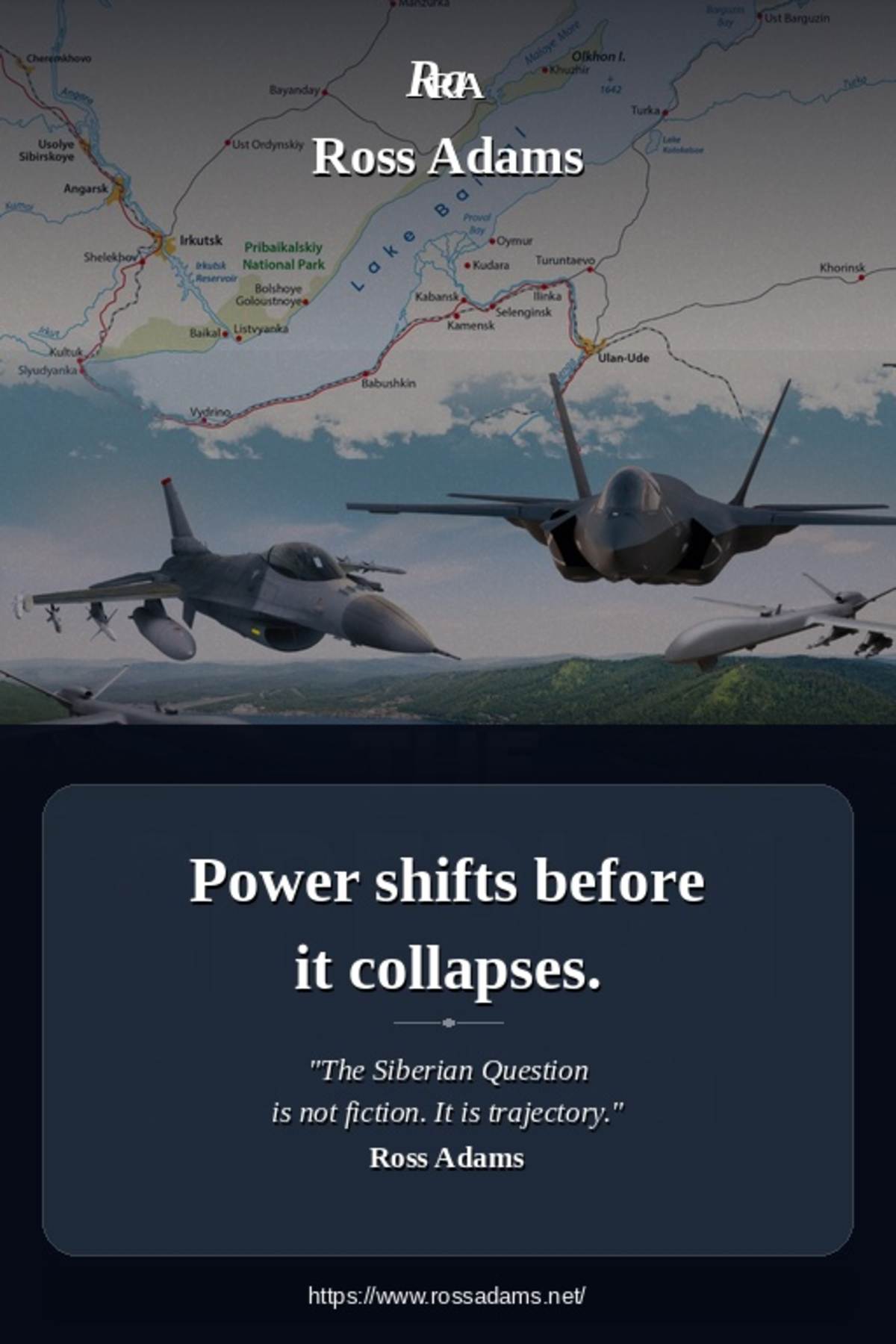
Power shifts before it collapses. This is the pattern to which I keep returning. Across legal practice, across historical study, across three plus decades of watching institutions navigate change. And it is the thesis at the heart of both The Siberian Question and The Price of Water.
Collapse is visible. Collapse is dramatic. Collapse gets named, analyzed, and written into history books. The fall of a government, the failure of a financial system, the fracture of an alliance. These are observable events with timestamps.
Power shifts rarely are visible. They are structural, incremental, and embedded in legal and economic frameworks long before anyone recognizes them as a crisis. They happen in the documents that don't make the news. In the agreements signed between parties whose relationship the world hasn't yet noticed. In the ownership structures built below the threshold of alarm. In the regulatory gaps that are exploited quietly while decision-makers are focused elsewhere.
By the time the failure is observable, when it gets named, assigned, a date, and the iconic photograph is taken, power has already moved. The leverage is in place. The frameworks for after are already in place.
The downfall is the consequence. The causes occur gradually, quietly, and more within the existing legal framework than anyone will later want to admit.
Why This Pattern Repeats
In Infrastructure Fragility, I wrote about how systems hold until they don't. How the stress accumulates invisibly before the sudden failure.
In How Water Becomes Leverage, I traced the mechanism by which resource asymmetry transitions from a geographic fact to a geopolitical tool.
In Why Systems Fail Gradually, I described the sequence. Stress below the visible threshold, indicators that flash but don't alarm, the normalization of deviance that precedes every major institutional failure.
In Scarcity Changes Political Behavior, I argued that resource scarcity doesn't just create shortage, it creates leverage, and leverage reorganizes political relationships faster than ideology ever could.
In The Legal Architecture of Resource Exploitation, I explained the mechanism by which that leverage gets encoded. How industry and creative, perfectly legal structures outpace regulatory response resulting in leverage living within entirely legal organizations which are very difficult to unwind.
Each of those five pieces describes a component of an overarching pattern. This piece names the pattern whole.
Power shifts before it collapses.
The Interval That History Misses
There is a specific interval in every major geopolitical transition over which history tends to skip. It's the period after the shift has begun but before the collapse is visible. The period when the world still looks stable to the people making decisions inside it. When historical stability is deemed the future. When new power and new structures are assembling quietly, legally, below the radar.
This interval is not dramatic. It doesn't make front pages. It doesn't generate the kind of imagery that ends up in documentaries. But it is where the outcome is determined. The decisions made during this interval, who secures access to what resource, who creates and controls the new ownership structures, who forges the new agreements, are what determine who wins after the fall. By the time the enivitable arrives and the world turns its attention to what happened, the consequential decisions are years in the past. The outcome was determined in the interval that nobody was watching. This is where geopolitical history actually happens. Not in the dramatic collapse. In the quiet accumulation of leverage that precedes it.
How the Novels Are Built
The Siberian Question is set in this interval.
The novel begins not at the moment of crisis but during the accumulation. The pressure is real, the trajectory is fixed, and the world still looks stable to the characters navigating it. The reader, equipped with the analytical framework developed across this Pressure Points series, can see what the characters cannot. The leverage is forming. The new frameworks are being assembled. The shift is already underway.
That gap between what the reader understands and what the characters believe is the engine of the novel's tension from the first page.
The Price of Water is set after the shift is complete.
By 2051, the Water Cabal controls much of the world's remaining viable freshwater. The collapse has already happened. The shift occurred over decades prior. Quietly, legally, in the interval when nobody was watching, or if they were, they turned a blind eye. The world of the novel is the natural outcome of decisions made even before the period The Siberian Question traces.
The two novels are, in this sense, the same story told from two positions on the timeline. The Siberian Question is set during the shift. The Price of Water is set in the aftermath of the collapse the shift created.
Why This Matters Now
The freshwater dynamic forming in the Eurasian context is in that interval are the dynamics over freshwater in many parts of the world. The stress is accumulating, In China, the structural water deficit is documented and worsening. The gap between Russian freshwater abundance and Chinese freshwater shortage is widening. The legal and corporate infrastructure through which that gap could be closed is being assembled. The regulatory response does not yet exist in any meaningful form. The world still looks stable to most of the people making decisions inside it. Historical stability is being read as given for the future. This is exactly the pattern described across all five previous Pressure Points entries. And it is exactly the moment around which both novels are built.
The shift is already underway. The collapse hasn't been named yet. The outcome is being determined right now, in the interval that history will later skip over. The trajectory is real. The timeline is fiction. But the gap between them is narrowing faster than I would prefer.
The Siberian Question is available now. The first chapter is free when you join the mailing list at rossadams.net.
The Price of Water is Book 2. The first chapter is free by emailing ross@rossadams.net.
The Iranian Promise, Book 3 of the Hammurabi Code Series, is in progress.